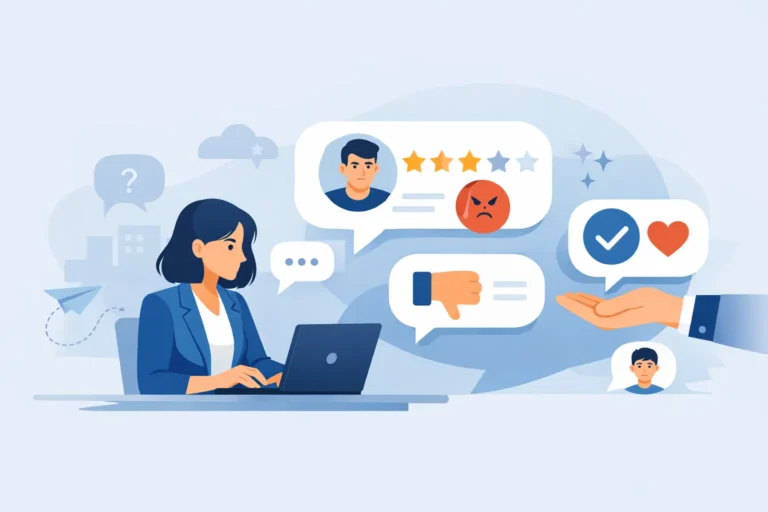

Online Comment Monitoring Service Explained
A reputation rarely falls apart all at once. More often, it erodes in public, one comment at a time.
That is why an online comment monitoring service matters. For businesses, executives, and public-facing individuals, the real risk is not just what gets published in a major article or review. It is what happens underneath – in comment sections, social threads, forums, video replies, and discussion boards where opinions spread quickly, context gets lost, and negative narratives gain traction before anyone in your organization sees them.
If your name, company, or leadership team attracts attention online, passive awareness is not enough. You need active monitoring, fast assessment, and a response strategy that protects credibility before minor issues become lasting search and perception problems.
What an online comment monitoring service actually does
An online comment monitoring service tracks conversations tied to your name, brand, products, leadership, or other reputation-sensitive terms across digital channels where public commentary appears. That includes social media comments, blog discussions, review responses, forum posts, video platform replies, and media-site comment sections.
The purpose is not simply to collect mentions. The real value is identifying which comments matter, how fast they are spreading, and whether they create legal, commercial, or reputational risk. A professional service looks beyond volume and focuses on impact.
That distinction matters. Not every negative comment deserves intervention, and not every positive trend deserves celebration. Some criticism reflects a service issue that should be addressed directly. Some commentary is coordinated, misleading, defamatory, or designed to damage trust. An experienced monitoring team helps separate noise from threat.
Why comment sections create outsized reputation risk
Commentary often shapes public perception more than the original content. People read the headline, then scan the replies to decide what others believe. That social proof effect is powerful, especially when potential customers, investors, media contacts, or employers are researching a person or organization under pressure.
For high-visibility clients, the risk is even sharper. Executives, public figures, and brands with public-facing leadership can become targets for pile-ons, misinformation, impersonation, and repeated hostile commentary across multiple channels. Once a negative framing takes hold in public discussion, it can influence journalists, search behavior, and future coverage.
There is also a timing issue. Harmful comments spread fastest outside business hours, during product launches, around breaking news, or when an unrelated controversy makes your name newly searchable. By the time an internal team notices the shift, screenshots may already be circulating.
Online comment monitoring service for brands under pressure
An online comment monitoring service is especially valuable when visibility is high and tolerance for reputational error is low. That includes established businesses, local brands with strong review dependence, founders with public profiles, professional firms, political figures, and individuals whose income depends on trust.
In those cases, monitoring is not a marketing add-on. It is a layer of reputation defense. It provides early warning when sentiment changes, when false claims begin to spread, or when engagement patterns suggest a coordinated attack rather than ordinary customer frustration.
For a business owner, that can mean catching a service complaint before it escalates into a broader accusation. For an executive, it may mean identifying a hostile narrative attached to their name before it influences stakeholders. For a public figure, it may mean spotting damaging commentary across platforms before the story hardens.
What strong monitoring looks like in practice
Effective monitoring combines technology with human judgment. Software can detect mentions and flag spikes, but software alone cannot understand nuance, intent, or legal exposure. A serious reputation partner reviews context, prioritizes threats, and recommends the right next step.
That next step depends on the situation. Sometimes the right move is a direct and measured reply. Sometimes it is escalation to platform reporting, legal review, or internal communications. Sometimes silence is the better choice, particularly when engagement would amplify a fringe accusation.
This is where many businesses get it wrong. They assume every negative comment should be answered quickly and publicly. In reality, response strategy depends on credibility, audience size, source history, and the risk of feeding the story. Speed matters, but judgment matters more.
A well-run service also tracks recurrence. One negative post may be manageable. Repeated variations of the same claim across channels point to a deeper issue, whether that is a dissatisfied customer, a competitor, a coordinated harassment effort, or a narrative gap in your public presence.
The difference between basic alerts and a managed service
Many organizations rely on free alerts, native platform notifications, or occasional manual checks. Those tools are better than nothing, but they are not a substitute for managed monitoring.
Basic alerts tend to miss context, buried discussions, and platform-specific comment activity. They also create a false sense of coverage. You may learn that your brand was mentioned, but not whether the conversation is escalating, whether influential users are joining in, or whether similar remarks are appearing elsewhere.
A managed service provides structure. It defines watch terms, monitors across channels, filters irrelevant chatter, assesses severity, and turns findings into action. That is particularly important for clients with privacy concerns or those facing sensitive matters where a poorly handled reply can create additional exposure.
Premium providers also understand discretion. For business leaders, celebrities, politicians, and high-net-worth individuals, comment monitoring is not just about sentiment. It can involve security concerns, reputational targeting, false allegations, and rapid-response requirements that demand confidentiality at every stage.
When to invest in an online comment monitoring service
The right time is usually earlier than most people think. If you wait until a visible crisis is already underway, your options narrow.
Monitoring is worth considering if your brand relies on public trust, if your name appears in press coverage, if you are launching a new product or campaign, if your organization is entering a sensitive period such as litigation or leadership change, or if you have previously dealt with online attacks, review abuse, or damaging commentary.
It is also valuable during periods of growth. As visibility increases, so does exposure. New audiences often bring new criticism, and competitors tend to pay closer attention when momentum is strong. Early monitoring helps you protect the upside instead of reacting only after harm appears.
For some clients, always-on oversight is the right fit. For others, short-term monitoring around a known risk event may be enough. The answer depends on profile, industry, search visibility, and the cost of reputational disruption.
What to look for in a provider
Not every service is built for serious reputation protection. If the offer focuses only on dashboards and automated sentiment scores, it is probably too shallow for high-stakes use.
Look for a provider that can explain how it identifies risk, how quickly it escalates urgent findings, and how it supports response strategy. Ask whether monitoring includes forums, media comments, social replies, and review environments rather than only headline mentions. Ask how false positives are handled and what level of analyst oversight is included.
Just as important, assess whether the provider understands reputational consequences beyond marketing metrics. A spike in negative comments is not just an engagement issue if it affects investor confidence, client retention, employment prospects, or public trust.
This is where a specialist firm such as Reputation Shield has an advantage. Comment monitoring works best when it is part of a broader reputation defense strategy, supported by experienced analysts, tailored intervention plans, and the discretion to manage sensitive exposure without unnecessary attention.
Monitoring is protection, not overreaction
Some decision-makers hesitate because they worry monitoring sounds defensive or excessive. In reality, it is the opposite. It is a controlled, informed way to stay ahead of preventable harm.
The internet does not pause while internal teams get aligned. Comments keep accumulating, screenshots keep spreading, and silence is often interpreted by the public in ways you did not intend. Monitoring gives you visibility, and visibility gives you options.
Not every comment demands action. But every serious reputational threat starts as information that someone either noticed in time or missed. When trust, influence, and income are tied to what people see online, waiting to find out later is rarely the stronger position.
The better position is to know what is being said, understand what it means, and respond with control while the window to protect your reputation is still open.