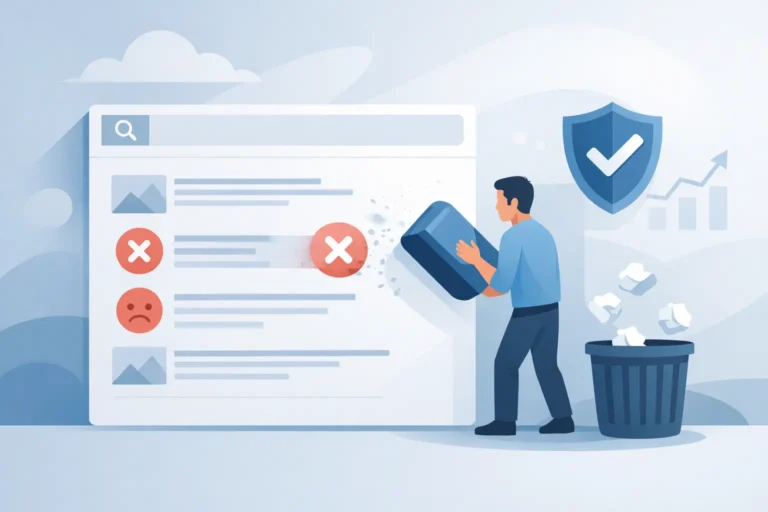

Reputation Management for Executives
A board meeting can go sideways before it starts. One misleading article, an old lawsuit mention, a clipped quote pulled out of context, or a wave of hostile commentary can shape how investors, employees, clients, and media view a leader before they hear a single word. That is why reputation management for executives is not a vanity exercise. It is a business safeguard.
For senior leaders, reputation lives in search results, news coverage, social media discussion, review platforms, and public records. It affects deal flow, hiring power, partnership confidence, speaking invitations, and internal trust. When an executive’s name carries risk, the company often feels it too. The stakes are personal, but they are also operational.
Why reputation management for executives carries higher stakes
An executive is not judged like an average professional. Visibility creates leverage, but it also creates exposure. A founder, CEO, board member, physician leader, investor, or public-facing entrepreneur becomes a shorthand for the organization’s standards. People assume the name reflects the business.
That creates a different level of pressure. A negative search result about a private individual may be unfortunate. The same result attached to a public executive can affect financing conversations, customer trust, media scrutiny, and employee morale. In some cases, even inaccurate or low-context information gains credibility simply because it is easy to find.
There is also a timing issue. Reputation damage rarely arrives on a convenient schedule. It can emerge during a capital raise, a promotion, a merger, a regulatory review, or a public launch. That is when delay becomes expensive. The longer a harmful narrative sits unchallenged, the more likely it is to be repeated, indexed, screenshotted, and treated as fact.
What executive reputation risk actually looks like
Most people imagine a reputation problem as a headline scandal. In practice, the risk is often quieter and more persistent. An outdated news story may outrank current achievements. A personal social post may be recirculated years later under a different narrative. Anonymous comments can begin to shape perception in industry circles. Even a review campaign aimed at the company can spill onto the executive leading it.
Search is usually the first battleground. When someone searches an executive’s name, they are looking for confidence markers. They want to see credibility, stability, leadership, and proof of character. If the first page is dominated by negative or irrelevant material, that absence of balance becomes a signal of its own.
The issue is not always whether the content is true or false. Sometimes the problem is proportion. A minor dispute from years ago should not define a leader more than their record, expertise, charitable work, innovation, or professional recognition. Effective reputation management restores proportion. It does not fabricate a persona. It makes sure the full picture is visible.
A strong executive reputation strategy starts before a crisis
The best time to protect a reputation is before it comes under pressure. Reactive action matters, but prevention offers more control. Executives who wait until a negative article trends or a search result begins climbing are already operating from a weaker position.
A proactive strategy starts with monitoring. You need to know what appears when your name is searched, where negative commentary is gaining traction, which platforms matter in your industry, and how quickly issues are developing. That visibility allows for early intervention, which is often more effective and less disruptive than a crisis scramble.
Just as important is asset building. Executives with a strong digital footprint are harder to distort. High-quality professional profiles, credible third-party mentions, media features, interviews, leadership commentary, awards, and consistent biographical information all help establish a trusted record. When this foundation exists, harmful content has more competition and less room to dominate.
There is a clear trade-off here. Some executives prefer minimal online visibility for privacy reasons. That instinct is understandable, especially for high-net-worth individuals or leaders in sensitive sectors. But total digital silence creates vulnerability. If you do not define your public profile at all, others may do it for you. The right strategy is not maximum exposure. It is controlled, deliberate visibility.
What happens when an executive reputation is under attack
Once a reputational threat is active, speed matters, but impulsive action can make things worse. A direct public response may validate a fringe accusation. Legal threats may attract more attention if they are poorly judged. Silence may be wise in one case and damaging in another. This is where experience matters.
The first step is assessment. What exactly is appearing online, where is it ranking, who is amplifying it, and what business risk does it create? A damaging blog post with no reach requires a different response than a national article, a coordinated social campaign, or a review attack tied to a broader dispute.
Then comes strategy selection. In some cases, removal is realistic. In others, suppression through stronger positive assets is the more practical path. Sometimes the answer is to correct inaccuracies with direct publisher outreach. Other times the priority is to strengthen the executive’s search profile fast enough to reduce exposure while a longer-term solution unfolds.
This is why one-size-fits-all programs tend to disappoint. Executive reputation issues are too sensitive, and often too visible, for generic tactics. The right plan depends on industry, geography, legal context, media attention, and the executive’s existing digital footprint.
The role of discretion in reputation management for executives
For executives, reputation work must be effective without becoming a second reputational event. That means discretion is not a nice-to-have. It is part of the service itself.
Senior leaders often need support while managing investor relationships, internal communications, legal counsel, and family privacy concerns at the same time. Public overcorrection can create fresh speculation. So can obvious self-promotion that appears timed to bury criticism. The work has to be measured, coordinated, and credible.
A discreet strategy respects both urgency and optics. It protects confidentiality, limits unnecessary visibility, and focuses on outcomes rather than noise. That is especially important for public figures, C-suite leaders, political professionals, and clients whose names attract media interest by default.
What effective executive reputation protection includes
At a high level, strong reputation protection combines defense and development. Defense means monitoring online mentions, identifying risks early, managing harmful content where possible, and responding with speed when narratives start moving. Development means strengthening the executive’s digital presence with authoritative content and credible signals that support trust.
Both sides matter. If you only defend, you stay in reactive mode. If you only promote, you leave active threats untouched. The most durable results come from combining rapid intervention with long-term reputation architecture.
That may include search result analysis, review and comment monitoring, media positioning, reputation repair campaigns, and content strategies designed to surface achievements, leadership credentials, and trusted third-party validation. The exact mix depends on exposure level and risk profile.
For executives with substantial public visibility, this work is rarely a short-term fix. Reputational resilience is built over time. That does not mean results are always slow. Some issues can be stabilized quickly. It means the strongest protection comes from consistent management, not one emergency response after another.
Choosing the right partner
If executive reputation is tied to revenue, leadership credibility, or personal security, the work should not be handed off to a low-touch vendor. It requires judgment, responsiveness, and a tailored plan. A serious reputation partner should understand high-sensitivity cases, move quickly when risks escalate, and communicate with the discretion expected at an executive level.
That is where specialist firms such as Reputation Shield stand apart. The value is not just in monitoring tools or standard reporting. It is in having experienced professionals who can assess sensitive situations, protect digital visibility, and build a reputation strategy around the realities of the individual client.
Executives are expected to lead under pressure. Their digital presence should not become a liability they discover too late. A well-protected reputation supports authority before the first meeting, before the first interview, and before the first negotiation. In high-stakes environments, that kind of trust is not optional. It is part of the job.
The smartest move is usually the quiet one made early, while there is still room to shape the story instead of chase it.