
Online Reputation Management Guide
A single search result can change the tone of a client conversation, a media inquiry, or an investor meeting before you ever speak. That is why an online reputation management guide is not just a marketing asset. For businesses, executives, and public-facing individuals, it is a control framework for protecting trust when visibility works for you and when it turns against you.
Reputation is now shaped in public, in real time, and often by people who do not have the full story. Reviews, news coverage, social commentary, forum posts, and search results all contribute to how others assess credibility. Some of that attention is fair. Some of it is misleading, outdated, or malicious. The practical question is not whether your reputation will be discussed online. It is whether you are monitoring it closely enough to respond with speed, judgment, and strategy.
What online reputation management actually covers
Online reputation management is the process of monitoring, influencing, repairing, and strengthening how a person or organization appears across digital channels. That includes search engine results, review platforms, news mentions, blogs, social media, image search, and even older content that continues to surface long after circumstances have changed.
For some clients, reputation management is defensive. A wave of negative reviews, a damaging article, or a false allegation may need urgent attention. For others, it is more strategic. They want stronger visibility for achievements, more control over branded search results, and a digital presence that reflects their current standing rather than a fragmented public record.
The right approach depends on the stakes. A local business with inconsistent reviews has a different risk profile from a CEO facing hostile press, or a public figure dealing with coordinated online attacks. The principles are similar, but the response plan should never be generic.
An online reputation management guide starts with exposure
Before you can improve anything, you need a clear view of what the public sees. That means searching your name, company name, products, executives, and common search variations. It also means going beyond the first page. Harmful content can sit lower in search results for months, then move upward when it gains traction.
Start by identifying where your exposure is strongest and where the risk is highest. Search results matter because they shape first impressions. Review platforms matter because they influence purchasing decisions. Social platforms matter because criticism can spread quickly, even when the facts are weak. News articles and blogs matter because they often carry long-term visibility and perceived authority.
This assessment should answer a few direct questions. What appears first when someone searches for you? Which assets do you control, and which are controlled by third parties? Where is the negative content concentrated? Is the issue isolated, recurring, or escalating? The difference between a contained problem and an active reputation threat is often timing.
Audit for accuracy, not just sentiment
Not all negative content should be treated the same way. Some criticism is legitimate feedback and should be addressed openly. Some is exaggerated but survivable. Some is false, defamatory, or intentionally harmful. Lumping everything together leads to poor decisions.
A disciplined audit separates valid concerns from content that may require escalation, removal requests, legal review, or suppression strategies. It also identifies positive assets that are underused, such as press mentions, executive bios, interviews, awards, case studies, or verified testimonials.
Monitoring is what prevents small issues from becoming search-result problems
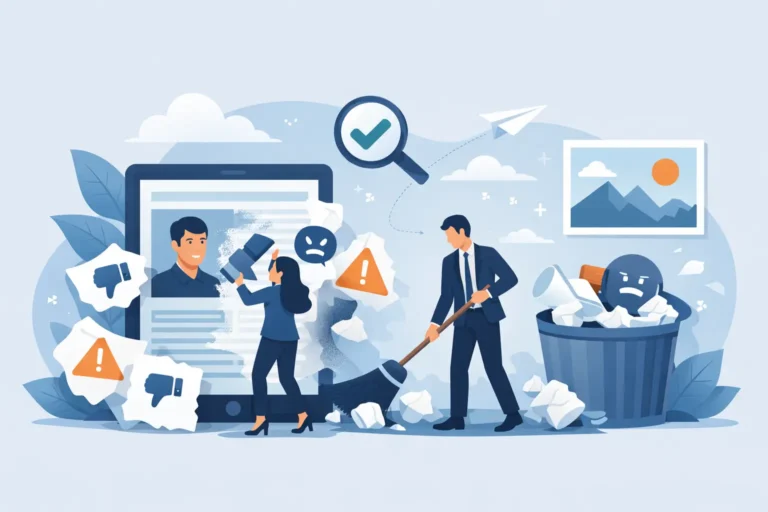
Most reputation damage becomes expensive because it is discovered too late. A negative post that goes unanswered can trigger screenshots, reposts, and commentary across multiple channels. By the time leadership notices, the issue has already expanded beyond the original source.
Continuous monitoring reduces that risk. It allows you to detect review spikes, brand mentions, social chatter, misleading content, and emerging narratives before they harden into search visibility. That early warning is especially important for organizations with public leadership, regulated operations, or high-value client relationships where trust loss has immediate commercial consequences.
Monitoring should be structured, not casual. Alerts alone are not enough. You need a process for reviewing what appears, assessing severity, assigning ownership, and deciding on the right response. Fast reaction matters, but disciplined reaction matters more.
Response strategy is where reputations are protected or damaged further
When negative content appears, many brands either overreact or disappear. Neither response inspires confidence. The stronger position is measured, factual, and proportionate to the issue.
If the complaint is genuine, acknowledge it promptly and move toward resolution. A defensive public argument rarely improves perception. If the content is false or abusive, document it, assess platform policies, and consider removal channels. If the issue involves media, legal risk, or personal safety, escalation should happen quickly and privately.
Tone matters. So does venue. Not every issue should be handled in public comments. Some situations require a visible acknowledgment and then a direct offline resolution. Others call for no public engagement at all, particularly when the source is acting in bad faith and is seeking attention rather than resolution.
Reviews require consistency, not improvisation
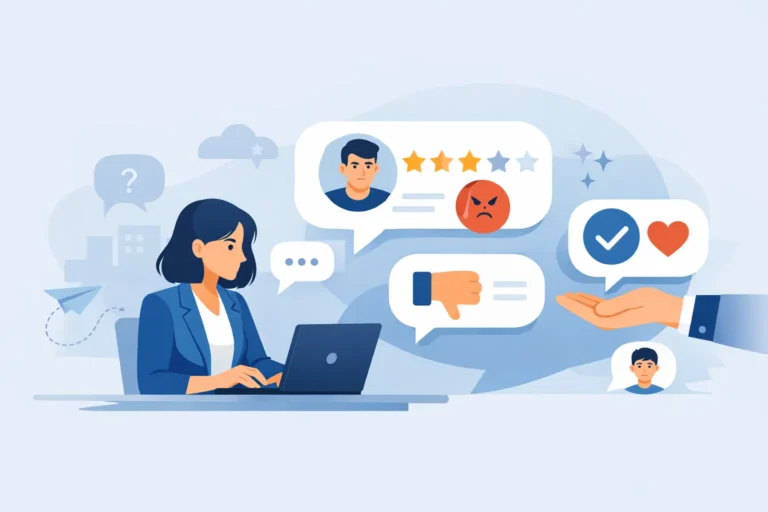
Review management deserves special attention because buyers often trust reviews more than brand messaging. A neglected review profile signals indifference. An aggressive review response signals instability. A strong review strategy is calm, consistent, and aligned with how you actually serve clients.
That includes responding to reasonable criticism, encouraging satisfied customers to share their experience, and spotting patterns that point to operational issues. It also means recognizing when reviews are fraudulent, coordinated, or policy violations. In those cases, evidence and proper escalation matter more than emotional rebuttal.
Content strength is part of reputation defense
One of the biggest mistakes in reputation management is focusing only on removal. Sometimes harmful content can be removed. Often it cannot. Even when it can, removal alone is not a durable strategy if there is nothing strong, current, and credible ready to take its place.
This is where positive asset development becomes essential. Authoritative profiles, thought leadership articles, media features, leadership bios, company updates, community involvement, and credible testimonials help shape what appears when your name is searched. They give search engines and audiences better material to find, index, and trust.
This is not about burying reality under promotional noise. Thin content does not carry weight, and overly polished messaging can look evasive. The goal is to build a truthful, high-quality digital record that reflects who you are now, not just what critics have said at a moment of conflict.
The best online reputation management guide includes crisis planning
A reputation crisis is rarely the right time to decide who speaks, what gets escalated, or which facts can be confirmed. Those decisions should be made in advance.
A workable crisis plan identifies internal decision-makers, external advisors, approved messaging paths, review and media response procedures, and thresholds for legal or executive involvement. It should also account for impersonation, coordinated attacks, data leaks, employee misconduct allegations, and viral misinformation. Not every organization needs the same level of complexity, but every exposed brand needs a plan.
For high-profile individuals and sensitive clientele, discretion is not optional. The response framework must protect privacy while still moving quickly. That usually requires expert handling, especially when the issue crosses platforms, jurisdictions, or media environments.
What to handle internally and when to bring in specialists
Some reputation work can be managed in-house. Routine review responses, basic monitoring, and content updates are often manageable if the team has time and clear authority. But serious reputation threats are different.
If negative content is dominating search results, if false claims are spreading, if press coverage is escalating, or if the reputational damage affects income, valuation, hiring, or public trust, specialist intervention is usually the better decision. The same is true for executives, public figures, and high-net-worth individuals whose exposure creates a larger attack surface and less room for trial and error.
Experienced firms bring technical monitoring, strategic response planning, suppression expertise, platform knowledge, and discretion. They also bring emotional distance, which matters more than many clients expect. Reputation pressure can make every post feel urgent. A specialist can separate noise from real threat and act accordingly.
Reputation Shield operates in exactly that space, where speed, privacy, and tailored intervention are often more valuable than broad marketing support.
What good reputation management looks like over time
A strong online reputation is not the absence of criticism. That standard is unrealistic and, in some cases, suspicious. What matters is whether the overall digital picture is accurate, credible, and resilient.
Over time, that means negative issues are identified early, genuine concerns are handled professionally, false or harmful content is challenged, and positive visibility is built with intent. It also means leadership understands that reputation is not separate from operations. Service quality, governance, communication, and public conduct all feed the digital record.
The brands and individuals who fare best online are usually not the ones who never face criticism. They are the ones who respond with discipline, protect what is true, and invest in credibility before they urgently need it.
If there is one useful place to start, it is this: search yourself the way a client, reporter, or stakeholder would. What appears first is not just information. It is your digital introduction, and it deserves active protection.