
How to Rebuild Online Credibility Fast
A single negative article, review spike, or viral post can change how you are judged before anyone speaks to you directly. That is why understanding how to rebuild online credibility is not a marketing exercise. For many businesses and public-facing individuals, it is a matter of protecting revenue, influence, and trust.
The hard part is not simply getting more positive content online. It is restoring confidence in a way that looks credible, holds up under scrutiny, and reduces future risk. If the response feels defensive, artificial, or rushed, the damage often deepens. Rebuilding credibility requires control, accuracy, and discipline.
Why online credibility breaks down
Credibility rarely collapses for just one reason. In some cases, the trigger is obvious – a damaging news story, a public complaint, a legal dispute, or a wave of poor reviews. In others, the issue builds quietly over time. Outdated search results, inconsistent business information, weak review management, and inactive digital profiles can all signal neglect.
For executives, founders, and high-visibility professionals, the standard is even higher. People do not just assess what is said about you. They assess what is missing. If your online presence lacks recent validation, strong third-party references, or a clear professional narrative, trust erodes faster than most realize.
This is why credibility repair is not the same as content creation. It is a strategic correction of what the public sees, what they infer, and what they believe.
How to rebuild online credibility without making it worse
The first step in how to rebuild online credibility is resisting the urge to react publicly before you understand the full exposure. A rushed reply can extend the life of a story, validate weak claims, or invite more scrutiny.
Start with a full audit. Search your name, brand, and key executives across standard search results, image results, review platforms, news mentions, and major social platforms. Look at the first three pages, not just the first few listings. Credibility damage often sits slightly below the surface, where journalists, clients, investors, or hiring teams still find it.
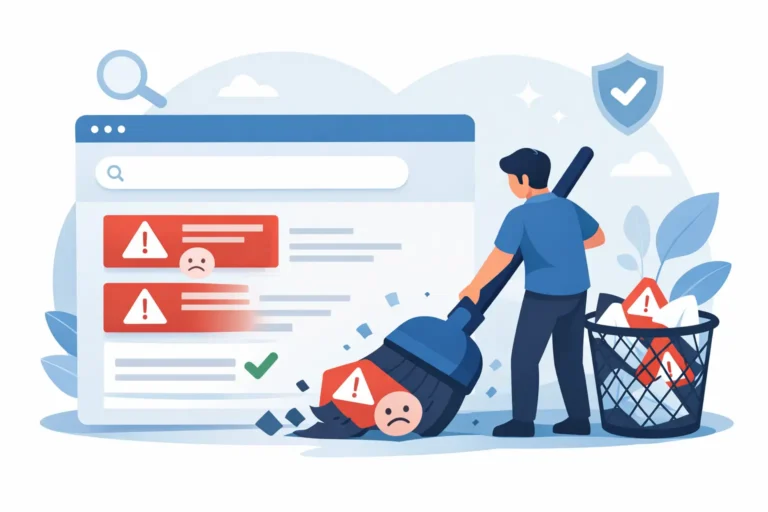
Then separate the problem into categories. Some content is factually false and may require formal removal efforts. Some is legitimate but harmful and needs a response strategy. Some is simply negative because it ranks well and nothing stronger competes with it. Those are very different problems, and they should not be treated the same way.
A disciplined assessment usually covers three questions. What is visible now? What is believable to an outsider? What is likely to spread or resurface? Once you know that, the repair plan becomes clearer.
Stabilize the issue before you try to improve perception
Many people focus too early on publishing positive content. That can help, but only after the immediate threat is under control. If harmful reviews are still arriving, if a false claim is still circulating, or if media attention is active, your first priority is containment.
That might mean documenting defamatory content, correcting false information on owned profiles, responding carefully to reviews, or aligning internal teams around one approved public position. If a business has multiple spokespeople posting different explanations, credibility weakens further. Consistency matters because audiences read inconsistency as dishonesty, even when the underlying facts are sound.
There is also a trade-off here. Not every attack deserves a public answer. Some issues gain traction only because they were acknowledged too aggressively. Others require a visible response to prevent silence from being interpreted as guilt. The right move depends on the source, the reach, and the audience involved.
Rebuild trust with evidence, not claims
Once the situation is stable, the next stage is proof. Credibility returns when people can verify positive signals for themselves. Saying you are trusted is weak. Showing recent, consistent evidence of trust is persuasive.
This usually begins with owned digital assets. Your website, executive bios, company profiles, and social presence should reflect the same professional identity. If your public image is fragmented, outdated, or thin, even supportive prospects may hesitate. Strong credibility signals include current leadership information, press-ready bios, verified achievements, professional imagery, accurate service descriptions, and visible signs of activity.
Third-party validation matters even more. Depending on your profile, that can include credible review growth, media mentions, expert commentary, speaking engagements, awards, case studies, or testimonials. The key is relevance. A restaurant needs a different trust structure than a law firm, private investor, or public figure.
This is where many credibility campaigns fail. They chase volume instead of authority. Ten weak mentions do less for trust than one strong, relevant endorsement appearing in the right place.
Search results shape reputation more than most people admit
If you want to know how to rebuild online credibility in a lasting way, pay close attention to branded search results. Search is often the final checkpoint before a decision is made. A prospect may hear good things about you, but they still search. An investor may receive a referral, but they still search. A journalist may have a balanced view, but they still search.
If the first page presents negative articles, stale profiles, poor reviews, or confusing identity signals, confidence drops immediately.
Improving search visibility is not about hiding reality. It is about making sure accurate, current, and relevant information is easier to find than distorted or outdated material. That may involve strengthening core web properties, expanding authoritative profile coverage, publishing substantive thought leadership, improving review acquisition, and promoting verifiable professional milestones.
Results take time, and that matters. In lower-risk cases, organic improvement may be enough. In urgent or high-sensitivity matters, a more active reputation strategy is often necessary to reduce visibility of harmful material while reinforcing trusted sources. This is where specialist support can make a significant difference, especially when the stakes involve contracts, elections, media exposure, or personal safety.
Reviews, responses, and the credibility test
For businesses, reviews often become the most visible shorthand for trust. Prospects know every company gets occasional criticism. What they watch is the pattern and the response.
A business with a few negative reviews but a calm, accountable response can still look highly credible. A business with no review strategy, defensive replies, or long periods of silence often looks riskier than the rating suggests.
When responding, precision matters. Avoid emotional language, public arguments, or statements that reveal confidential details. Acknowledge the concern where appropriate, correct factual inaccuracies when necessary, and move the matter offline if resolution is possible. The goal is not to win a public fight. It is to show composure, professionalism, and control.
At the same time, you need a steady process for generating legitimate positive reviews from satisfied clients or customers. Not forced. Not manipulated. Not clustered in a way that looks suspicious. Credibility improves when new feedback appears naturally and consistently.
Credibility repair is also a prevention strategy
One of the biggest mistakes brands and individuals make is treating reputation repair as a one-time project. Online credibility is not restored permanently because one article was published or one bad listing was addressed. It holds only if there is ongoing protection.
That means monitoring mentions, tracking review activity, watching search movement, and updating core digital assets before they become stale. It also means identifying vulnerabilities early. A neglected executive profile, an inactive Google Business listing, or a dormant social account can become a weak point during the next reputational challenge.
For high-profile clients, discretion is just as important as speed. The best reputation work often happens quietly, through strategic adjustments, content planning, platform intervention, and close monitoring rather than public spectacle. That is especially true when families, wealth, careers, or political exposure are involved.
A firm like Reputation Shield typically approaches this with tailored planning rather than a generic checklist, because the right response depends on your visibility, industry, and level of reputational risk.
When to bring in expert help
Some credibility issues can be handled internally. Many cannot. If harmful content is ranking strongly, if false information is spreading, if press attention is involved, or if the situation affects employment, deal flow, or public trust, the cost of delay can be substantial.
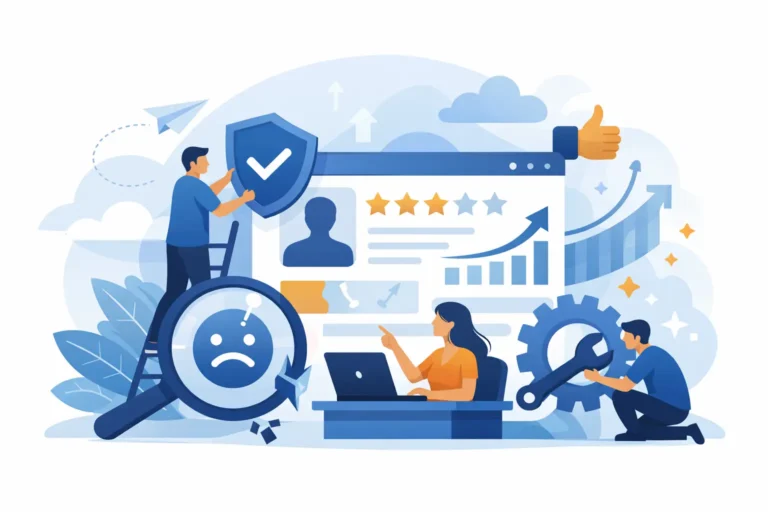
Expert support becomes especially valuable when multiple channels are involved at once – search, reviews, social commentary, media coverage, and stakeholder perception. In those moments, reputation repair is part communications strategy, part digital visibility work, and part risk management.
The right advisor does more than publish content. They assess the threat, prioritize actions, protect privacy where possible, and build a credibility framework that can endure beyond the immediate problem.
Online trust can be damaged quickly, but it does not return by accident. It returns when your digital presence begins to reflect the truth clearly, consistently, and with enough authority that the right audience can believe it again.