
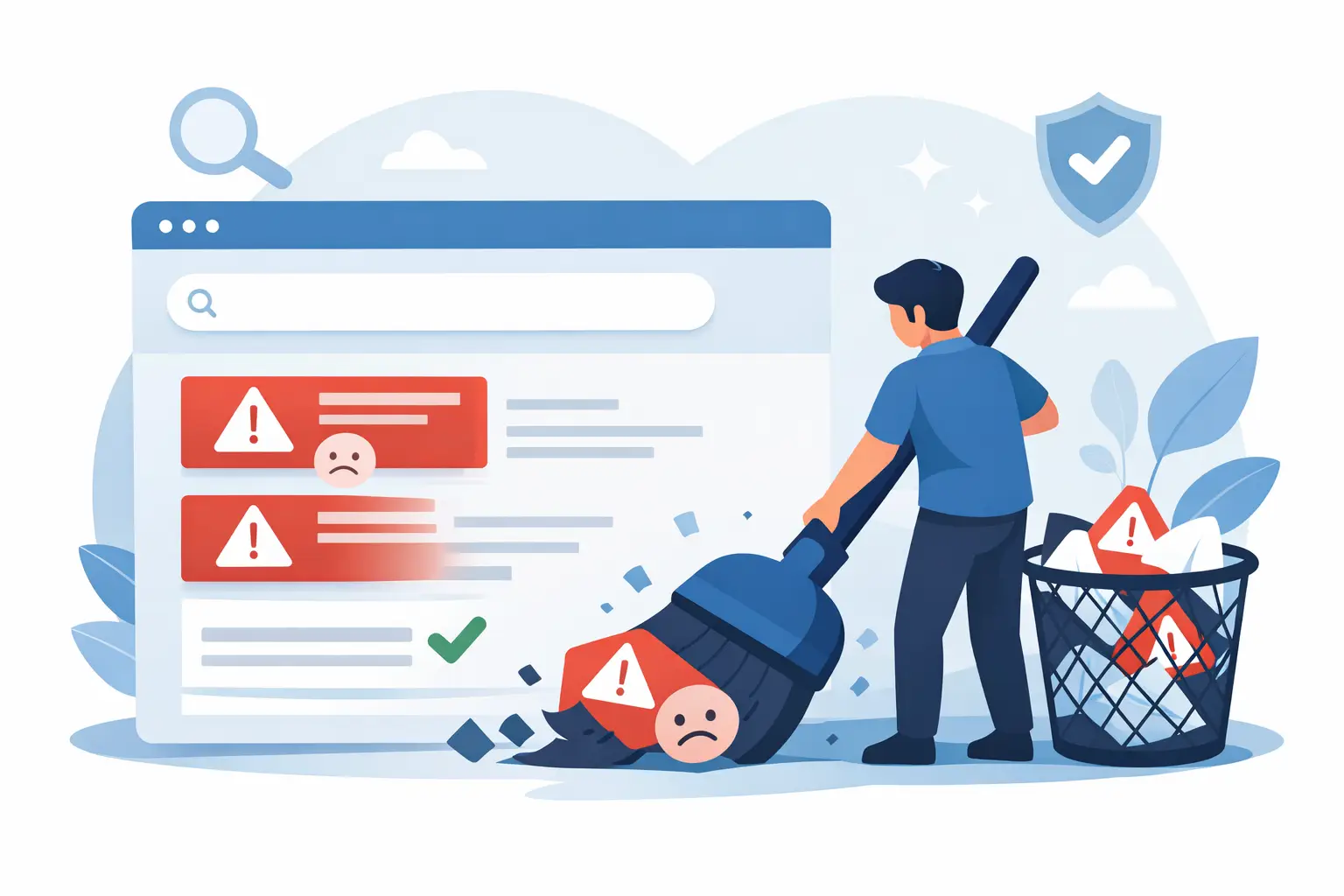
How to Remove Harmful Search Results
One damaging search result can do more than bruise your ego. It can stall a deal, cost you a client, complicate hiring, unsettle investors, or put your family under unwanted scrutiny. If you are searching for how to remove harmful search results, you are usually not dealing with a minor inconvenience. You are dealing with visibility, credibility, and control.
The first thing to understand is that not every negative result can be erased, and not every harmful result should be handled the same way. A false blog post, an outdated court record, a review attack, a leaked personal detail, and a defamatory news article all require different responses. The right strategy starts with precision, not panic.
How to remove harmful search results the right way
Search results are only the surface layer. Google and other search engines index content that lives somewhere else, usually on a news site, review platform, forum, blog, or social profile. That means there are generally two paths: remove the source content itself, or reduce its visibility in search through suppression and stronger positive assets.
If the content clearly violates a platform policy, contains personal information, involves impersonation, or is legally actionable, removal may be possible. If the content is technically lawful and remains published, the better route is often strategic displacement. This is where many people lose time. They focus only on Google, when the real leverage sits with the publisher, the host platform, or the legal context behind the content.
Start by identifying what kind of result you are facing
Before you take action, classify the result. Is it false, misleading, outdated, invasive, malicious, or simply unfavorable? Those distinctions matter.
A false accusation may support a defamation claim. An old arrest mention that no longer reflects your record may call for update requests or suppression. A negative review campaign may involve fake accounts and platform abuse. A personal address appearing in search can trigger privacy-based removal requests. Each scenario has a different threshold of proof and a different speed of resolution.
You should also document everything early. Capture screenshots, URLs, ranking positions, dates, and any related social posts or reposts. Harmful content can change without notice. Good documentation protects your position if you need to escalate to a publisher, attorney, platform, or reputation specialist.
Removal options that may work
When clients ask how to remove harmful search results, they usually want a direct fix. Sometimes that exists. Sometimes it does not. The most effective approach is to pursue every legitimate path in the right order.
Request removal from the website owner or publisher
If the content appears on a private website, blog, or online publication, contact the site owner with a concise, factual request. Emotional threats rarely help. A stronger approach is to identify what is inaccurate, invasive, outdated, or unsupported and explain why removal or correction is warranted.
If the issue is factual inaccuracy, ask for a correction first if full removal is unlikely. A corrected article may lose traction and become far less damaging. If the issue is a clear policy or legal violation, make that case directly and provide evidence.
Report content that violates platform policies
Review sites, forums, social platforms, and search engines all have reporting channels. These may apply to doxxing, impersonation, explicit content, non-consensual imagery, harassment, fake engagement, and certain forms of financial or medical misinformation.
This route is often underused because people submit weak reports. Strong submissions are specific, documented, and tied to the exact rule being violated. General complaints about unfairness usually go nowhere.
Use legal remedies when the facts support them
If the content is defamatory, extortionate, invasive, or unlawfully published, legal intervention may be appropriate. That can include cease-and-desist letters, formal takedown demands, privacy claims, or court orders in serious cases.
This is where discipline matters. Legal action can work, but it can also amplify the issue if handled poorly. Some publishers become more aggressive when threatened without a solid basis. For high-profile individuals, executives, and brands, discretion is as important as force.
Request deindexing where available
In some cases, even if the content remains live, search visibility can be reduced through deindexing requests. Search engines may remove results for certain privacy violations, outdated cached pages, or content that should no longer appear due to legal or technical reasons.
This is not a universal remedy, and it is not the same as deleting the content. But for some clients, removing a harmful result from name-based search visibility is the outcome that matters most.
When removal is not possible
Not every harmful result will come down. News archives, public records, opinion content, and certain review pages can be stubborn. That does not mean you are out of options. It means your strategy shifts from deletion to control.
Build stronger assets that outrank the damage
Suppression works by giving search engines better, more relevant, and more authoritative content to show for your name or brand. That can include executive bios, company profiles, press coverage, interviews, thought leadership, verified social profiles, and high-quality websites you control.
The key is not to publish random content and hope for the best. Search engines reward authority, consistency, and relevance. If the harmful result targets a person, the replacement assets should strongly match that person’s name, credentials, and public footprint. If the issue targets a business, the suppression strategy should support branded search intent, trust signals, and entity authority.
Strengthen your digital foundation
Many reputational problems persist because the positive side of the search landscape is too thin. There is no strong official site, no optimized profile content, no media-ready biography, and no structured digital presence to compete with bad results.
A durable reputation strategy fixes that weakness. It creates an ecosystem around your name or brand so one harmful page is no longer the defining first impression. This is particularly important for founders, physicians, attorneys, political figures, and public-facing executives, where search results can directly influence trust and revenue.
Monitor continuously, not occasionally
Search results change. New articles index. Reviews spike. Old forum threads resurface. A problem that appears handled can return months later because nobody is watching.
Ongoing monitoring gives you the chance to act early, before a harmful result gains traction. That is one reason premium reputation management is rarely a one-time exercise. It is protective infrastructure.
Common mistakes that make harmful results worse
People in crisis often move fast in the wrong direction. They contact the publisher angrily, post public rebuttals that attract more attention, buy low-quality SEO packages, or try to bury the result with thin content. Those moves can harden opposition and make the content more visible.
Another mistake is treating all negative content as removable. If a result is lawful, fact-based, and on a high-authority domain, promising instant deletion is not credible. A serious strategy respects the limits of the landscape while still improving the outcome.
There is also a timing issue. The longer harmful content ranks unchecked, the more likely it is to be copied, discussed, or screenshotted elsewhere. Early intervention usually gives you more options and lower overall damage.
When to bring in professional help
If the result affects your income, public standing, employability, personal safety, or business relationships, this is not the place for guesswork. Professional intervention becomes especially valuable when the issue involves legal sensitivity, multiple platforms, coordinated attacks, high-profile exposure, or urgent first-page visibility.
A qualified reputation team can assess what is realistically removable, what should be challenged, what should be suppressed, and how to execute without drawing more attention to the issue. That matters for private individuals, and it matters even more for executives, brands, and public figures whose names are constantly being searched.
At Reputation Shield, this work is handled with discretion and a tailored plan, because a physician facing a review attack does not need the same response as a CEO targeted by a defamatory article or a public figure dealing with invasive search results.
What success actually looks like
Success is not always a blank search page. In many cases, success means harmful content is removed where possible, weakened where necessary, and pushed below the range where it shapes decisions. It means your name begins to reflect who you are now, not a distorted, outdated, or malicious version of you.
The practical question is not just how to remove harmful search results. It is how to regain control over what people see first and what they believe next. That requires a calm process, the right evidence, and a strategy built for the facts in front of you.
If your search results are putting trust at risk, act while the problem is still manageable. The internet rarely fixes these issues on its own, but with the right response, it does not have to define you either.