
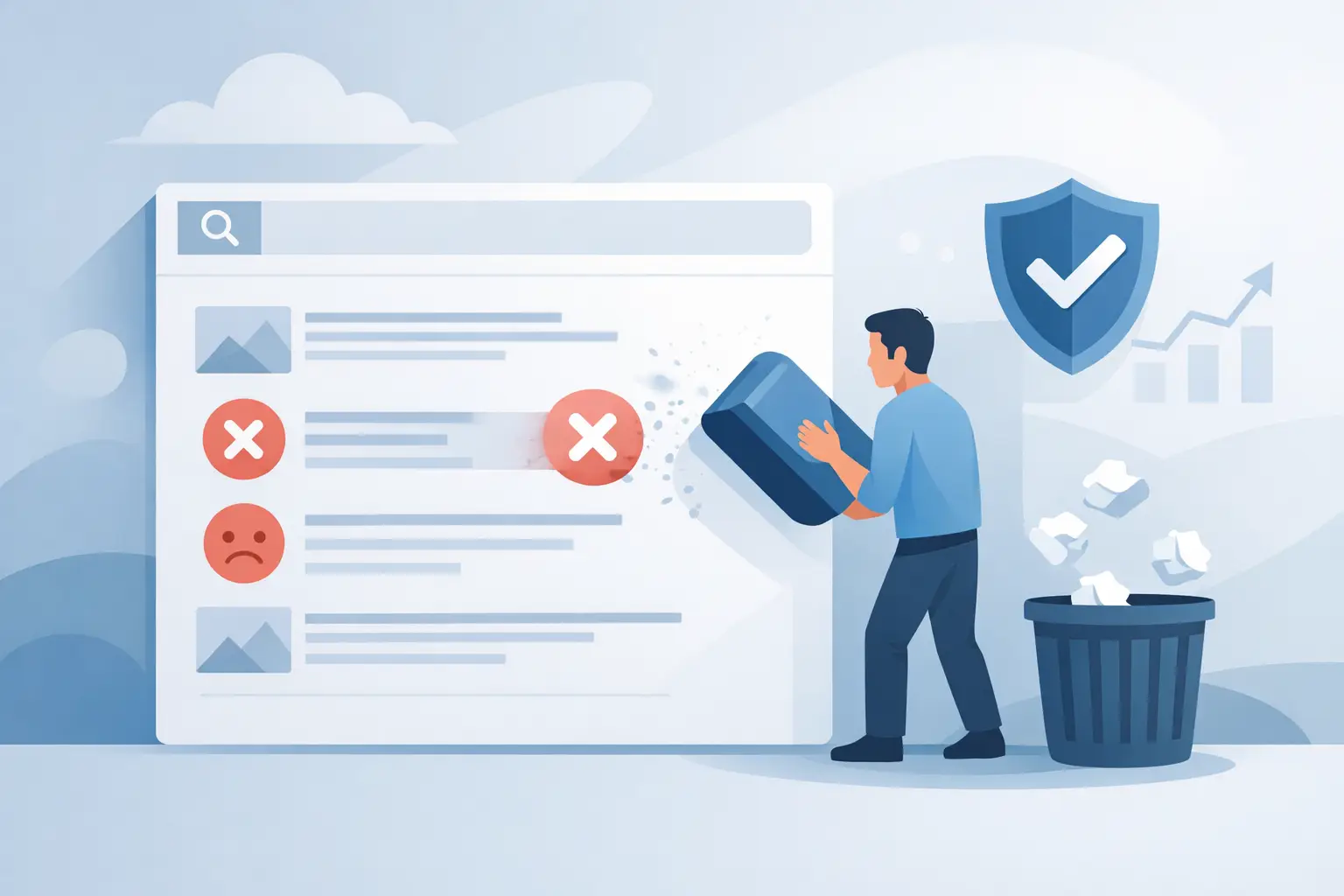
How to Remove Negative Search Results
A single damaging result on page one can cost far more than pride. It can delay a deal, block a hire, unsettle investors, or shape public opinion before you ever get a chance to respond. If you are trying to understand how to remove negative search results, the first thing to know is this: not every result can be deleted, but many can be removed, reduced, or pushed down with the right strategy.
That distinction matters. Search results are not a fixed record of truth. They are a ranked mix of news coverage, review pages, blog posts, forum threads, court records, social profiles, and scraped content. Some are removable because they violate laws or platform rules. Others remain online but can be outranked by stronger, more accurate content. The right response depends on what is ranking, why it is ranking, and how much damage it is causing.
How to remove negative search results the right way
The biggest mistake people make is treating every negative result as if it requires the same response. It does not. A false review, an old arrest record, a defamatory article, and a critical but lawful opinion each call for a different approach. Acting too quickly can even make the issue worse, especially if your outreach draws fresh attention to the content.
The first step is to identify the source. Ask whether the page is hosted on a review platform, a news outlet, a personal blog, a social network, a government database, or a third-party data broker. Then assess whether the content is false, outdated, private, misleading, or simply unfavorable. Those categories determine your options.
If the content violates platform policy, a direct removal request may work. If it is defamatory, privacy-invasive, or unlawful, legal channels may apply. If it is accurate and legally protected, removal is less likely, and suppression becomes the practical path. This is where experience matters. The line between removable and non-removable content is not always obvious, and poor judgment can waste valuable time.
When removal is possible
Negative search results are most often removable when they involve clear policy or legal violations. Fake reviews are a common example. Most major review platforms prohibit impersonation, conflicts of interest, coordinated attacks, and fabricated customer experiences. If you can document that the reviewer was never a client or that the account is part of a pattern of abuse, you may have grounds for removal.
Defamation is another route, but it requires precision. Being harsh or unfair is not the same as being defamatory. In general, you need a false statement presented as fact that causes harm. A post saying, “I hated working with this company” is usually opinion. A post falsely accusing a business owner of fraud may be very different. The stronger your evidence, the stronger your position.
Privacy-based removals also matter. Search engines and platforms may remove certain content involving doxxing, non-consensual explicit material, financial account details, medical records, forged documents, or other sensitive personal data. In some cases, outdated or irrelevant personal information can also be challenged, especially where local laws support the request.
Then there are technical removals. Sometimes a page has already been taken down by the publisher but still appears in search results because of cached indexing. In that case, the issue is not the content itself but the search engine listing. A removal request for outdated cache or deindexed pages can often solve that quickly.
When suppression is the smarter move
Many clients begin by asking how to delete a bad result. Often, the better question is how to stop it from being seen. If a page is legally protected, hosted by a stubborn publisher, or simply not removable under policy, suppression is usually the most effective solution.
Suppression means improving what ranks above the negative result so it loses visibility and traffic. That can include professional profiles, company pages, verified social accounts, press features, interviews, thought leadership content, high-authority directory listings, videos, and other assets that strengthen the digital narrative around your name or brand.
This is not about flooding the internet with fluff. Weak content does not outrank entrenched negative results for long. Search engines reward authority, consistency, and relevance. That means the content being promoted must be credible, well-structured, and strategically published across domains that search engines already trust.
For executives, public figures, and businesses with meaningful visibility, suppression often works best as part of a broader reputation defense program. You are not just trying to bury one result. You are building a stronger, more resilient search presence so future attacks have less room to take hold.
What to do before you contact anyone
Before filing complaints or sending legal notices, preserve evidence. Take screenshots of the content, the search results page, the URL, and any related profiles or comments. Record dates, names, and platform details. If rankings change later, this documentation becomes essential.
Next, assess the risk. Is the result appearing for your personal name, your business name, or a high-value search phrase tied to your industry? Is it on page one or buried deeper? Is it from a high-authority source that search engines tend to favor? The answer affects urgency and strategy.
You also need to consider the Streisand effect, where an aggressive response amplifies the very material you want to contain. Public-facing disputes, emotional messages, and poorly framed legal threats can trigger reposting, commentary, and fresh indexing. Quiet, well-managed intervention is usually the safer path.
A practical process for removing or reducing harm
If you are serious about how to remove negative search results, the process should be disciplined.
Start with classification. Separate results into four groups: removable through platform policy, removable through legal or privacy claims, removable through technical deindexing, and non-removable but suppressible. This prevents wasted effort.
Then prioritize by impact. A negative result on page one for your exact name deserves more attention than a low-ranking complaint on an obscure site. A major publication requires a different response than an anonymous forum thread. Not every result deserves escalation.
Once priorities are clear, prepare your evidence and outreach. Platform requests should be factual and concise. Legal notices should be specific and supportable. Technical removals should identify whether the content is gone, changed, or blocked. If outreach is necessary, it should be measured and handled by someone who understands both reputational and legal consequences.
After that, build the replacement landscape. This is where suppression efforts begin immediately, even while takedown requests are pending. Strong positive assets can take time to gain authority, so waiting until a removal fails is rarely efficient.
Finally, monitor continuously. Search results shift. Old pages reappear. New attacks can surface. Ongoing monitoring lets you catch changes early and respond before a problem hardens into a lasting search result.
Why DIY efforts often stall
On paper, removal sounds simple. Report the content, explain the issue, and wait. In reality, most people run into three obstacles.
First, they misjudge what qualifies for removal. Platforms and search engines use narrow standards, and emotional harm alone is rarely enough. Second, they submit weak or incomplete evidence. A valid claim can still fail if it is poorly documented. Third, they focus only on deletion and ignore suppression, leaving their search presence vulnerable even if one result disappears.
High-sensitivity cases raise the stakes further. Public figures, senior executives, and high-net-worth individuals often need a discreet strategy that protects privacy while addressing the issue quickly. In those situations, visibility management is not a side task. It is a form of risk control.
That is why many turn to specialist support. A firm such as Reputation Shield approaches the issue as both a removal problem and a digital positioning problem, with tailored intervention based on source type, legal exposure, and search behavior. That level of coordination is often what separates short-term relief from durable reputation protection.
How long does it take?
It depends on the source and the remedy. A technical removal for a dead page may be resolved quickly. A policy-based complaint can take days or weeks. Legal disputes may take longer, especially if the publisher contests the claim. Suppression typically requires patience, because search authority builds over time.
The trade-off is straightforward. Fast action is important, but rushed action can be sloppy. The most effective approach is urgent without being reckless. It protects your position now while improving what people see next month and next year.
If a negative result is affecting your name, your business, or your future opportunities, do not assume you have to live with it. Search results can be challenged, reshaped, and strategically controlled. The key is knowing which path fits the problem, and acting before one damaging page becomes the story people remember.